How to Choose the Perfect Catering Menu for Large Events
Planning a large-scale event involves managing hundreds of moving parts, but few elements carry as much weight as the food and beverage program. The culinary experience plays a defining role in how guests perceive the overall success of an occasion. Whether you are organizing an expansive corporate convention, a high-profile non-profit gala, or a massive wedding reception, the food must satisfy diverse palates, fit within strict operational timelines, and maintain top quality while being served at scale.
Designing a catering menu for a massive crowd is drastically different from planning a menu for an intimate dinner party. When headcount grows into the hundreds or thousands, logistics, dietary restrictions, and kitchen efficiency become just as crucial as the flavor profiles themselves. To ensure your culinary program goes smoothly, you must approach the selection process with strategy, foresight, and a deep understanding of crowd dynamics.
Establish Your Event Profile and Budget Foundations
Before scheduling a single tasting with a culinary provider, you must clearly define the foundational parameters of the gathering. The nature of the event acts as a guide for what styles of food and service are appropriate.
Define the Demographic and Purpose
A professional medical conference requires a completely different catering approach than an evening fundraising gala or a tech company product launch. Consider the primary goal of the gathering. If the main objective is networking, heavy seated dinners can disrupt the flow of conversation. Conversely, if guests are paying top dollar for a formal seat at a charitable event, they expect an upscale, multi-course dining experience.
Analyze your attendee demographic, taking into account general age groups, professions, and geographic origins. A younger, tech-forward crowd may appreciate experimental flavors, interactive action stations, and sustainable plant-based options. A more traditional corporate board might prefer classic, time-tested proteins and elegant, straightforward presentations.
Calculate the True Per-Person Budget
Large events offer economies of scale, but unexpected costs can quickly derail a budget if not managed properly. When looking at catering quotes, ensure you are calculating the complete cost per person, which extends far beyond the raw cost of the food. A comprehensive catering budget must account for tax, service charges, staff labor hours, equipment rentals, linens, and potential overtime fees. Understanding your absolute financial ceiling early allows you to collaborate transparently with your caterer to maximize value without compromising on quality.
Select the Optimal Service Style for Mass Execution
The service style you choose dictates the entire rhythm of the event. It impacts room layout, audiovisual schedules, staffing ratios, and how long guests spend at their tables.
Plated Dinners
A plated dinner represents the gold standard for formal events. Guests remain seated while synchronized service staff deliver uniform plates to each table. This method gives you complete control over the timeline, which is ideal if you have a tight itinerary of awards, speeches, or presentations.
However, plated dinners are often the most expensive option due to the high volume of service staff required to execute seamless delivery to a massive room. From a culinary perspective, choices are naturally limited, usually restricted to a beef, chicken, or vegetarian option selected by guests weeks in advance.
Buffet Service
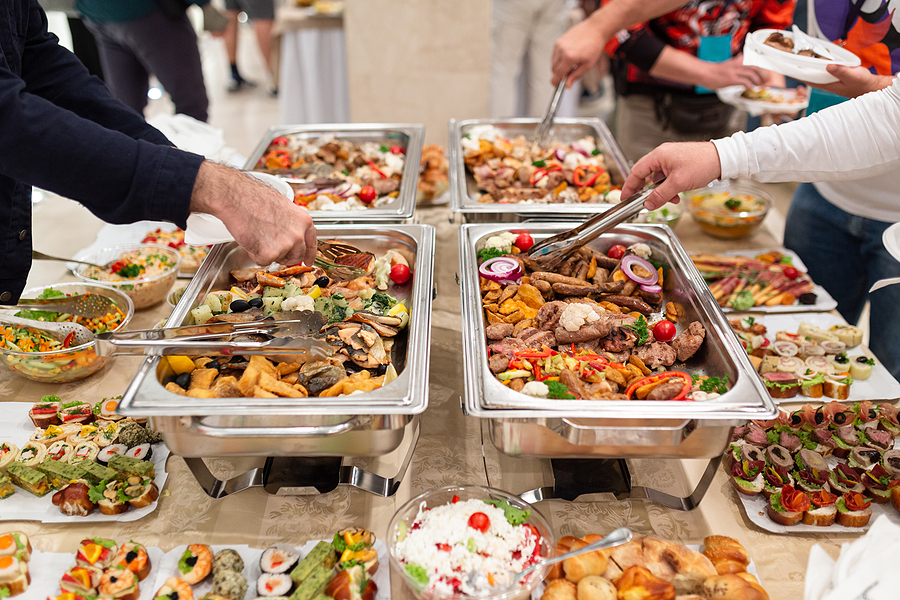
Buffets offer guests a wider array of food choices and allow them to control their portion sizes. This setup accommodates diverse preferences easily and can feel more casual and social.
The biggest vulnerability of a buffet at a large event is operational bottlenecks. To prevent lines from gridlocking your venue, you must work with the caterer to set up multiple identical buffet stations throughout the room. A good rule of thumb is to provide one double-sided buffet line for every 75 to 100 guests.
Food Stations and Interactive Action Counters
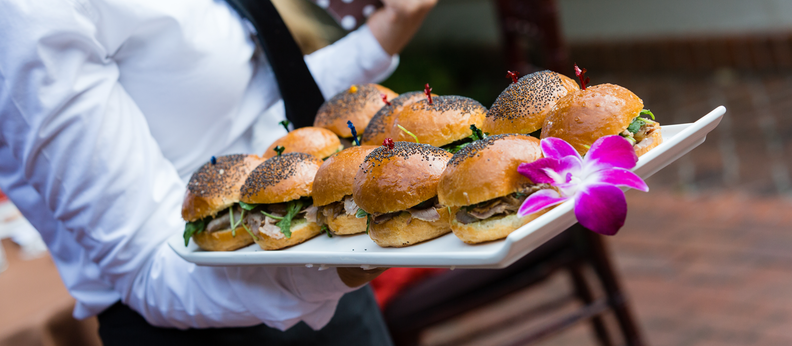
Food stations are a popular option for modern large-scale events. Food is distributed across themed areas throughout the venue, such as a street taco bar, a gourmet carving station, or an artisanal pasta counter.
This layout encourages guests to move around, mingle, and explore the space, making it perfect for networking events and cocktail-style receptions. It also takes pressure off the main kitchen, as food is continuously prepared and finished right in front of the attendees.
Navigate Dietary Restrictions and Cultural Preferences
In today’s culinary landscape, accommodating dietary restrictions is a necessity. Failing to provide substantial, high-quality alternatives for guests with specific dietary needs can ruin their experience.
-
Proactive Data Collection: Build detailed dietary preference questions directly into your digital RSVP and event registration systems. Do not wait until the day of the event to discover that twenty VIP attendees require strict gluten-free or vegan meals.
-
The Power of Universal Design: Work with your chef to make core menu items naturally compliant with common dietary restrictions. For example, selecting a delicious main course that is naturally gluten-free and dairy-free simplifies kitchen operations and reduces the need for custom, individual plates.
-
Clear Labeling: Whether hosting a buffet, a station event, or passed hors d’oeuvres, ensure every single dish features clear, easy-to-read signage listing common allergens such as nuts, dairy, gluten, soy, and shellfish.
-
Substantial Vegetarian Options: Move past the uninspired grilled vegetable plate or basic pasta primavera as your default vegetarian option. Plant-based attendees deserve an entree with the same level of care, protein balance, and creative flavor as the meat-based selections.
Balance the Menu for Temperature, Speed, and Scale
A dish that tastes phenomenal when prepared for four people in a tasting kitchen can completely fall apart when mass-produced for five hundred plates sitting under a banquet warming dome. When curating the menu, prioritize items that hold their integrity over time.
Avoid Finicky and Delicate Proteins
Delicate seafood like flaky white fish, scallops, or precisely cooked medium-rare duck breast are incredibly difficult to execute perfectly at scale. By the time the plate travels from the kitchen line to a table across a massive ballroom, these items can easily become dry, rubbery, or cold. Instead, favor resilient proteins that retain moisture well under warming conditions, such as braised beef short ribs, French-cut chicken breasts with rich pan sauces, or slow-roasted pork belly.
Consider Seasonal and Regional Logistics
Align your menu with the season and the physical location of the venue. Serving heavy, rich cream soups and dense stews at an outdoor summer tent event will leave guests feeling sluggish and uncomfortable. Opt for crisp, refreshing salads, chilled elements, and citrus-forward profiles for warm-weather dates. Furthermore, utilizing local, seasonal ingredients ensures optimal freshness, reduces the carbon footprint of your supply chain, and often proves more cost-effective due to regional abundance.
Frequently Asked Questions
What is a standard staffing ratio for serving a large-scale plated dinner versus a buffet?
For a formal plated dinner, you should plan for a staffing ratio of approximately one server for every 10 to 12 guests to ensure quick, professional service. If the event features wine service at the table, this ratio should be tightened further. For a buffet-style service, the required floor staff drops significantly, usually averaging one server for every 25 to 30 guests, as their primary responsibilities shift to clearing dirty plates and replenishing buffet trays.
How far in advance of a large event should the final menu selections and headcount guarantees be locked in?
Initial menu concepts and service styles should be chosen three to six months before the event to secure the caterer and lock in base pricing. The final headcount guarantee, which dictates the exact amount of food the kitchen orders and the number of staff scheduled, is typically required by caterers between 7 and 14 business days before the event date. Once this deadline passes, numbers can generally be adjusted upward for a fee, but cannot be lowered.
How do caterers ensure that hot food stays warm when serving hundreds of plates simultaneously?
Commercial caterers utilize specialized equipment designed for mobile hot-holding and transport. Plated meals are built on warm plates, stacked using heat-resistant plate covers, and stored in insulated rolling cabinets called hot boxes, which use humidity and heat to preserve quality. For buffets and stations, chefs use sophisticated induction burners, chafing dishes with controlled fuel sources, and heated stone slabs to maintain food temperatures without overcooking the dishes.
What is the best way to handle alcohol calculations and beverage packages for large crowds?
You generally have two options: a flat per-person hourly package or a consumption-based bar. A per-person package offers budget predictability, charging a set fee per hour regardless of how much guests drink, which is ideal for lively evening crowds. A consumption bar tracks the exact number of bottles or drinks opened and bills you at the end. This can be more cost-effective for daytime corporate events or older demographics where alcohol consumption is naturally lower.
How much extra food do caterers typically prepare beyond the final guaranteed headcount?
Most professional caterers build a buffer of 3% to 5% over your guaranteed headcount into their back-of-house kitchen preparation. This safety net accounts for unexpected last-minute guests, dropped plates, or sudden dietary changes on the floor. However, this extra food stays in the kitchen as a backup and is not automatically set out unless the guest count exceeds the original agreement.
Can leftover food from a large event be packed up or donated to local shelters?
Due to strict local health department regulations and liability insurance policies, most professional caterers cannot allow clients to pack up perishable leftover food from a buffet or station. Food that has sat out at room temperature for hours enters the temperature danger zone for bacterial growth. However, many caterers partner with verified food rescue organizations to safely collect unserved, properly refrigerated back-of-house surplus food for immediate donation.