
Superfoods or Marketing Hype? The Truth About What We Eat
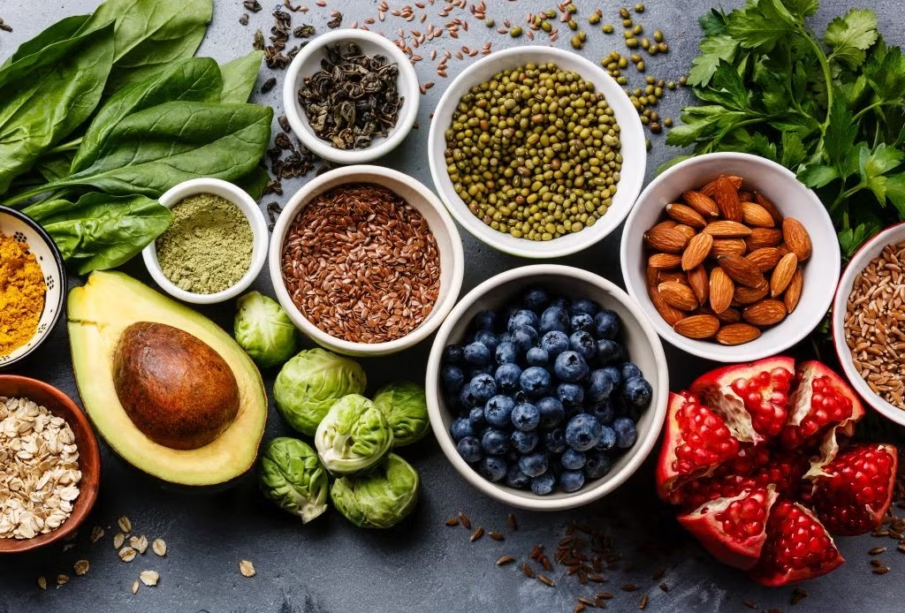
Walk down the aisle of any modern grocery store, and you will be bombarded with products bearing the label superfood. From powdery green supplements to exotic berries sourced from remote rain forests, consumers are constantly told that eating these specific foods holds the key to boundless energy, weight loss, and immunity from chronic illness. The promise is alluring: by simply adding a few expensive items to your shopping cart, you can bypass the complex, everyday hard work of nutrition.
However, from a scientific standpoint, the word superfood does not officially exist. Regulatory bodies such as the Food and Drug Administration or the European Food Safety Authority do not recognize the term, nor do they maintain a set of nutritional criteria required to earn it. The concept was not created by dietitians or medical researchers, but rather by corporate marketing teams looking to drive sales of specific agricultural products. To understand what we are actually putting into our bodies, we must separate verified nutritional science from clever commercial branding.
The Birth of a Marketing Phenomenon
The strategic use of food packaging to manipulate consumer behavior has a long history. The first true corporate superfood campaign occurred during World War I, when a major fruit company launched an aggressive marketing push to sell mass quantities of imported bananas. The company financed advertising blitzes and medical pamphlets touting the banana as a sterile, naturally wrapped medical marvel capable of curing digestive issues and providing cheap, unmatched energy. The strategy worked flawlessly, and a blueprint was created: isolate a single whole food, highlight its chemical components, and brand it as a necessity for human survival.
In the digital age, this tactic has been amplified. The recipe for creating a modern superfood trend is highly systematic. First, an obscure or exotic ingredient is identified, preferably something with an ancient history or an appealing origin story, such as Andean maca root or Himalayan goji berries. Next, early-stage laboratory studies, often performed on rodents or isolated cells in petri dishes, are publicized to show that the food contains high concentrations of a specific antioxidant or micronutrient. Finally, lifestyle influencers and wellness brands market the food at a premium price, capitalizing on consumer anxieties regarding public health and aging.
Deconstructing the Claims: What the Science Actually Says
To evaluate the actual health impact of these highly praised foods, we must look closely at how nutritional research is conducted and how those findings are frequently misrepresented to the public.
The Problem with Extrapolation
When a study claims that a specific fruit destroys cancer cells, consumers assume that eating a bowl of that fruit will yield the same result inside the human body. In reality, these experiments are often performed by exposing isolated cells in a dish to concentrated, massive doses of a specific chemical extracted from the fruit. The human digestive system processes food far differently. By the time your stomach acids, digestive enzymes, and liver metabolize a food, the actual bioavailable concentration of those nutrients reaching your bloodstream is a tiny fraction of what was tested in the laboratory.
The Acai Berry Illusion
Acai berries became a global sensation based on claims that their exceptionally high antioxidant content would accelerate weight loss and slow down cellular aging. While acai berries do possess a solid concentration of anthocyanins, which are the pigments responsible for the deep purple color, clinical trials have shown zero evidence that they possess unique fat-burning properties. Furthermore, because raw acai berries spoil rapidly after harvest, the versions consumed by most people in Western countries are pasteurized juices, frozen purees, or dried powders. These processed variations are frequently loaded with added sugars, honey, and calorie-dense toppings to mask the naturally bitter, earthy taste of the berry, effectively turning a health food into a dessert.
Kale Versus Everyday Greens
Kale was elevated to cultural stardom as the ultimate green superfood, causing sales to skyrocket and forcing casual dining establishments to restructure their menus. Kale is undeniably a nutrient-dense vegetable, offering excellent levels of vitamin K, vitamin C, and fiber. However, when you compare kale directly to humble, less expensive leafy greens like spinach, Swiss chard, or even standard broccoli, the nutritional differences are minimal. Spinach provides significantly more iron and folate than kale, while regular cabbage offers comparable digestive benefits at a fraction of the financial cost. The obsession with kale was a triumph of aesthetics and lifestyle branding rather than a breakthrough in dietary science.
The Dark Side of the Superfood Trend
The constant pursuit of miracle ingredients does more than just drain your bank account; it can actively distort healthy dietary behaviors and create systemic problems within the global food supply chain.
-
The Halo Effect: This psychological phenomenon occurs when a consumer believes a single food is so exceptionally healthy that it balances out poor dietary choices elsewhere. For example, a person might justify eating a highly processed, sugar-laden meal because they drank a green juice containing spirulina earlier in the day. No single ingredient can counteract a baseline diet high in ultra-processed foods, refined sugars, and sedentary lifestyle habits.
-
Economic Exploitation of Local Communities: When an exotic crop suddenly becomes a global superfood sensation, the massive spike in international demand can devastate the local ecosystem and economy where the crop originates. The sudden global obsession with quinoa caused prices in Bolivia and Peru to rise so sharply that the indigenous populations who relied on the grain as a primary staple for generations could no longer afford to buy it, forcing them to turn to cheaper, imported processed foods.
-
Environmental Degradation: Mass cultivation of a single trending crop leads to monoculture farming practices, which deplete local soil nutrients, require heavy chemical pesticide use, and destroy regional biodiversity. The massive global demand for avocados, driven by their status as a source of healthy fats, has led to illegal deforestation and severe water scarcity in agricultural regions of Mexico and Chile, where thousands of gallons of water are diverted daily to sustain profitable avocado orchards.
Building a Realistic, Budget-Friendly Nutrition Strategy
True health cannot be packaged into a costly powder or found in a single exotic berry. Nutritional science consistently demonstrates that human longevity and vitality depend on a diverse pattern of eating whole foods over a sustained period. Instead of hunting for expensive, trending labels, focus on filling your plate with accessible, nutrient-dense staples.
| Elite Superfood Cult | Affordable Everyday Alternative | Primary Shared Nutritional Benefit |
| Goji Berries | Blueberries or Blackberries | Anthocyanins, Vitamin C, and Dietary Fiber |
| Chia or Hemp Seeds | Whole Flaxseeds or Walnuts | Omega-3 Fatty Acids and Plant Proteins |
| Maca Root Powder | Standard Radishes or Garlic | Sulfur-rich Compounds and Phytochemicals |
| Imported Quinoa | Brown Rice, Oats, or Lentils | Complex Carbohydrates and B Vitamins |
By shifting your mindset away from the search for a singular dietary cure-all, you can protect yourself from predatory marketing campaigns. A truly health-supportive diet is built on variety, balance, and consistency, utilizing affordable, local ingredients that have been sitting on grocery store shelves for decades.
Frequently Asked Questions
What does the term nutrient density actually mean in scientific terms?
Nutrient density refers to the ratio of essential micronutrients, such as vitamins, minerals, and phytochemicals, relative to the total caloric content of a specific food. A food is considered highly nutrient-dense if it delivers a vast array of health-supportive compounds with a minimal caloric footprint. For example, a cup of raw spinach provides significant amounts of vitamins A, K, and folate for only seven calories, making it exceptionally nutrient-dense compared to a slice of white bread, which provides high calories but minimal micronutrients.
Are expensive green powders an effective replacement for fresh vegetables?
No, green powders cannot fully replace the physical and biological benefits of consuming fresh, whole vegetables. The manufacturing process of dehydrating and pulverizing greens into a shelf-stable powder frequently degrades heat-sensitive vitamins like vitamin C and eliminates the natural cellular matrix of the plant. Crucially, powdering removes the intact dietary fiber that is absolutely essential for slowing down sugar absorption, maintaining healthy gut microbiomes, and promoting long-term satiety.
Can consuming too many antioxidant supplements or superfoods be harmful?
Yes, it is entirely possible to experience nutritional toxicity by overconsuming isolated nutrients. While antioxidants from whole foods are generally safe because they are consumed in balanced, natural proportions, mega-dosing through highly concentrated supplements or extracts can disrupt your body natural cellular balance. Excessively high levels of isolated antioxidants can actually shift into a pro-oxidant state, causing cellular damage and interfering with your immune system natural ability to destroy harmful bacteria.
Why are frozen fruits and vegetables often just as healthy as fresh, organic options?
Produce destined for the frozen aisle is typically harvested at the absolute peak of its ripeness and flash-frozen immediately on-site. This process effectively locks in the vitamins, minerals, and antioxidants, preventing them from degrading. Conversely, fresh produce is often picked before it is fully ripe so it can survive long-distance shipping, and it can sit in transport trucks and grocery displays for weeks, slowly losing its nutritional value through exposure to light, air, and heat.
What are phytochemicals, and why are they important in daily nutrition?
Phytochemicals are naturally occurring chemical compounds produced by plants to protect themselves from evolutionary threats like fungi, pests, and intense solar radiation. When humans consume these plants, the phytochemicals, such as flavonoids, carotenoids, and polyphenols, interact with our cellular pathways to reduce systemic inflammation, optimize cellular repair mechanisms, and enhance metabolic function. They are found abundantly in all colorful fruits, vegetables, herbs, and spices.
How can I identify if a health claim on a food label is legitimate or just marketing hype?
Be skeptical of grand, sweeping claims that promise rapid weight loss, disease reversal, or instant energy boosts. Look past the prominent buzzwords on the front of the packaging and turn the product over to analyze the official ingredient list and nutrition facts panel. If a product claims to be a healthy pomegranate-blueberry superfood blend, but the ingredient list reveals that apple juice concentrate and refined sugar are the primary ingredients, the claim is pure marketing hype.